Royal Greenwich, from Crooms Hill to Thamesmead
| Area | Homes you mostly find | What the surveyor checks first |
|---|---|---|
| West Greenwich and Crooms Hill | Houses from the 17th to the 19th centuries on Crooms Hill and Hyde Vale, west of the park, many with basements | Damp in front basements and vaults, rot in sash bottom rails, gypsum or cement over lime plaster on Crooms Hill |
| Ashburnham Triangle and East Greenwich | Victorian terraces in stock brick, under Article 4 directions in both conservation areas | Replacement windows, doors and roofs that needed permission in the Ashburnham Triangle, cement pointing |
| Blackheath Park and the Span estates | Span houses of the 1950s by Eric Lyons, including Foxes Dale, Hall Gate and The Keep | Rot at the base of Span timber boarding, flat roof outlets, coloured asbestos panels at ground floor |
| Progress Estate, Eltham | Arts and Crafts garden suburb cottages begun in 1915 for Woolwich Arsenal munition workers | Cracked render, exposed chimneys, century-old slate roofs, and Article 4 control on Progress Estate windows |
| Shrewsbury Park Estate, Shooters Hill | 1930s houses built by John Laing in 1934 to 1936 on the northern slopes of Shooters Hill | Original 1930s wall ties and roof tiles, tree roots on curving Shooters Hill avenues, Article 4 limits |
| Woolwich, Plumstead Common and the Royal Arsenal | Terraces stepping up from the river to Plumstead Common, and Royal Arsenal Woolwich buildings turned into flats | Cracks where stepped Plumstead terraces meet, damp in rear walls against higher ground, leaning retaining walls |
| Greenwich Peninsula and Kidbrooke | Flats built since 2000 along the Peninsula and at Kidbrooke, many in tall blocks | Fire safety and building safety papers, cladding records, and Peninsula service charge budgets |
Royal Greenwich packs four building traditions into one borough: Georgian and older houses on Crooms Hill, modernist Span estates around Blackheath Park, a First World War garden suburb in Eltham, and a band of new riverside towers from the Peninsula to Woolwich. An inspection in SE10 can look nothing like one in SE9, so each visit is planned around the building type.
Four centuries of Royal Greenwich housing
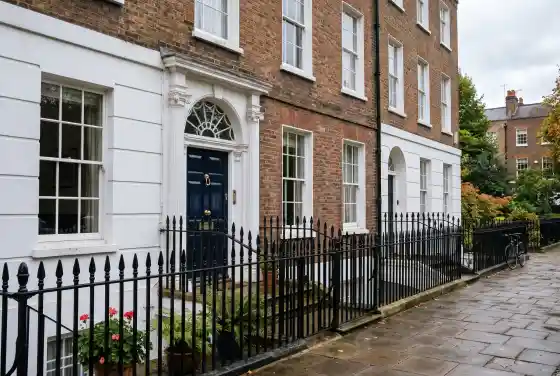
The Valuation Office Agency dates 21.8% of the borough’s homes to before 1919, against 28.9% across London, and most of them sit in West Greenwich, the Ashburnham Triangle, East Greenwich, Charlton and Woolwich. The council’s characterisation study describes Crooms Hill and Hyde Vale, west of Greenwich Park, as a winding mix of houses from the 17th to the 19th centuries, which means basements below pavement vaults, timber sashes and lime-plastered solid walls to inspect.
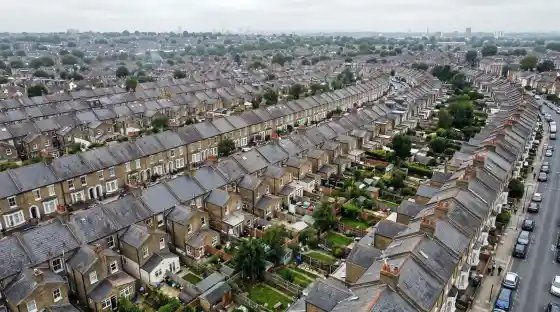
The post-war decades left their mark too: 27% of homes date from 1945 to 1982, from the Span estates of Blackheath Park to the post-war blocks of Woolwich and Thamesmead. The same study names the Span terrace at 11 to 26 Hall Gate, of 1957 and listed Grade II, and The Keep, 44 Span houses of the same year. Terraced houses make up 30.7% of the stock, above the capital share, from Charlton and Plumstead streets to the Progress Estate cottages.
Span houses and the Progress Estate
Historic England’s entry for 2, 4 and 6 Foxes Dale, Grade II houses of 1957 designed by Eric Lyons for Span, records brick cross walls spanned by reinforced concrete beams, Thermalite block front and rear walls clad in timber ship-lap boarding, coloured asbestos sheets at ground floor and timber-framed windows. On a Blackheath Park Span house a Greenwich Level 3 survey checks the boarding for rot at its base, the felt or asphalt and outlets of the shallow roofs, and the original panels, which are safe left undisturbed but cost money to remove during alterations.
The council’s study records that construction of the Progress Estate began in 1915 to house Woolwich Arsenal munition workers, under the Ministry of Munitions and then the county council, as a single garden suburb in the Arts and Crafts manner. On those Eltham cottages cement render cracks and traps water, exposed chimneys lean or lose their flashings, and slate roofs past a century old show slipped slates and nail fatigue. Shrewsbury Park Estate, built by John Laing in 1934 to 1936 on the northern slopes of Shooters Hill, brings 1930s wall ties, original tiles and big trees on curving avenues instead. For an Eltham cottage or Plumstead terrace that needs real work, the renovation project survey goes further into what the works will involve.
Twenty-three Royal Greenwich conservation areas and their Article 4s
The council’s conservation areas list shows 23, from Ashburnham Triangle, Blackheath Park and Charlton Village to Plumstead Common, the Royal Arsenal Woolwich, Sun in the Sands and Woolwich Common. Its Article 4 page records directions in Ashburnham Triangle, East Greenwich, Progress Estate, Rectory Field, Shrewsbury Park Estate and West Greenwich, with two each in East and West Greenwich, and says that in those areas replacing windows and doors and re-roofing may need planning permission.
Historic England lists 540 entries in the borough, 73 of them at Grade I or II*. A listed Crooms Hill townhouse or Span house suits the listed building survey, because listed building consent covers most changes inside and out and unauthorised past works pass to the new owner. Our guide to property law for buyers sets out how consent and Article 4 directions work, past decisions are on the council’s planning and building control pages, and completion certificates can be found through the Royal Greenwich building control archive.
Peninsula flats, Woolwich towers and the river
27.5% of Royal Greenwich homes were built in 2000 or later, against 18.5% for the capital, and new builds made up 6.4% of sales in the year to September 2026. Most are flats on Greenwich Peninsula, at the Royal Arsenal in Woolwich and at Kidbrooke, where a Level 3 survey in Greenwich is not always the right tool, and our Level 2 vs Level 3 guide helps you decide. In taller blocks, buildings at least 18 metres or 7 storeys high with two or more homes are higher-risk buildings under the Building Safety Act, so cladding and fire safety documents affect mortgages, resale and the Peninsula service charge.
Leasehold made up 51.1% of sales, and 31% of households rent socially, so an ex-council flat in Woolwich or Thamesmead may come with the council as freeholder and major works ahead. Only 6% of households live in a converted house, against 11.1% for the capital, but a split Victorian house in Charlton still needs fire separation and sound checked through the flat and conversion survey.
The Environment Agency map puts 25.3% of the borough in Flood Zone 3, on the low ground beside the Thames, and that zone ignores the Thames Barrier, which stands inside the borough in the Thames Barrier and Bowater Road conservation area. Check the address on the GOV.UK long term flood risk service and expect the surveyor to comment on how exposed a Peninsula or Woolwich ground floor is.
Prices, energy ratings and the Plumstead slopes
The median price paid across Royal Greenwich was £460,000, against £518,000 across London, with terraced houses at £500,000 and detached houses at £840,000, though the detached median rests on a small sample of sales. The all-homes median was 1.1% higher than a year earlier, but medians move with the mix of Peninsula flats and Eltham houses sold, not with any one home’s value. The energy register rates 37.3% of the borough’s homes D or below, lower than the capital because of the newer flats, while older Woolwich and Plumstead terraces with solid walls and single glazing still fall in that group.
Plumstead and Woolwich climb steeply from the river towards Shooters Hill and Plumstead Common, so stepped Plumstead terraces often crack where one house meets the next, rear walls built against higher ground take in damp, and garden retaining walls lean or bulge after years of water pressure.
Booking a Royal Greenwich inspection
Send L3S London the Royal Greenwich address, whether a Span house in Blackheath Park, a Progress Estate cottage or a Woolwich terrace, and we confirm a fixed written fee set by its size. Before the visit the surveyor checks the conservation map, any listing entry and the flood map for the postcode, and on the day more time goes on the roof, cladding and render of Span and Progress Estate homes.
Royal Greenwich in the national datasets
| Figure | Greenwich | London | What it means for the survey | Source and period |
|---|---|---|---|---|
| Homes built before 1919 | 21.8% | 28.9% | Below the capital share: West Greenwich, Ashburnham Triangle and Woolwich hold most of the borough's pre-1919 homes. | VOA, list at 31 Mar 2026 (127,000 homes) |
| Homes built 1945 to 1982 | 27% | 22.3% | Span estates in Blackheath Park and the post-war blocks of Woolwich and Thamesmead: early materials, flat roofs. | VOA, list at 31 Mar 2026 (127,000 homes) |
| Homes built in 2000 or later | 27.5% | 18.5% | The Peninsula, Royal Arsenal and Kidbrooke flats: cladding papers, building safety duties and service charges. | VOA, list at 31 Mar 2026 (127,000 homes) |
| Terraced houses, share of homes | 30.7% | 24.4% | Above the capital share, from Charlton and Plumstead terraces to the Progress Estate cottages in Eltham. | VOA, list at 31 Mar 2026 (127,000 homes) |
| Households in part of a converted or shared house | 6% | 11.1% | Fewer conversions than the capital, but a split Charlton or Woolwich house still needs fire separation checked. | ONS Census 2021, 21 Mar 2021 (114,054 households) |
| Households in social rented homes | 31% | 23.1% | Many Woolwich and Thamesmead flats on sale are ex-council, with the council as freeholder and major works to come. | ONS Census 2021, 21 Mar 2021 (114,051 households) |
| Share of sales that were new builds | 6.4% | 1.2% | Several times the capital share, mostly Peninsula and Woolwich flats where a snagging list may suit better. | HM Land Registry, sales Oct 2025 to Sep 2026 (2,113 sales) |
| Share of sales that were leasehold | 51.1% | 50.8% | About half of sales were leasehold: read the lease, service charge and planned works. | HM Land Registry, sales Oct 2025 to Sep 2026 (2,113 sales) |
| Median price paid, all homes | £460,000 | £518,000 | Below the capital median, but repairs to a Span roof or a Crooms Hill basement cost the same. | HM Land Registry, sales Oct 2025 to Sep 2026 (2,113 sales) |
| Median price paid, terraced houses | £500,000 | £585,000 | A typical Charlton, Plumstead or Eltham terrace price, below the capital median for terraces. | HM Land Registry, sales Oct 2025 to Sep 2026 (763 sales) |
| Median price paid, detached houses | £840,000 | £885,000 | Small sample of detached sales, mostly in Blackheath, Eltham and Shooters Hill. | HM Land Registry, sales Oct 2025 to Sep 2026 (51 sales) |
| Change in median price paid on the year before | 1.1% | -2.3% | The median moves with how many Peninsula flats or Eltham houses sold, not any one home's value. | HM Land Registry, Oct 2025 to Sep 2026 v the year before (5,019 sales) |
| Homes rated D or below | 37.3% | 45% | Below the capital share because of newer flats; older Woolwich and Plumstead terraces still rate poorly. | EPC register, certificates to 12 Oct 2026 (101,538 homes) |
| Share of the borough in Flood Zone 3 | 25.3% | n/a | Low riverside land by the Thames; the zone ignores the Thames Barrier, so check ground floors. | Environment Agency, published Nov 2026 |
| Listed building entries | 540 | n/a | From Crooms Hill houses to Foxes Dale, listed homes need consent for most changes inside and out. | Historic England list, published Nov 2026 |
| Grade I and Grade II* entries | 73 | n/a | Grade I and II* entries in the borough need specialist repair methods and consent for most work. | Historic England list, published Nov 2026 (540 homes) |
Data: Valuation Office Agency: Council Tax stock of properties 2026; ONS Census 2021; HM Land Registry Price Paid Data; Energy Performance of Buildings Register (domestic EPCs); Environment Agency Flood Map for Planning (flood zones), via planning.data.gov.uk; Historic England National Heritage List for England, via planning.data.gov.uk. Open Government Licence v3.0.
Questions from Greenwich buyers
Is a Span house in Blackheath Park hard to survey?
It needs a surveyor who knows 1950s construction: Historic England's entry for 2, 4 and 6 Foxes Dale records brick cross walls spanned by reinforced concrete beams, block front and rear walls clad in timber boarding, and coloured asbestos sheets at ground floor. A Level 3 survey in Greenwich on a Span house checks that boarding for rot, the roof outlets and the condition of those original panels.
What is special about buying on the Progress Estate in Eltham?
Construction began in 1915 to house Woolwich Arsenal munition workers, and the Progress Estate is now a conservation area with an Article 4 direction, so replacing windows and doors or re-roofing normally needs planning permission. On these Eltham cottages the surveyor spends the time on the slate roofs, the render, the chimneys and whether past alterations were approved.
Do I need a Level 3 survey for a new flat on Greenwich Peninsula?
New builds made up 6.4% of Royal Greenwich sales, and for a recent Peninsula flat many buyers choose a Level 2 survey or a snagging inspection instead. The fuller inspection makes more sense for an older Charlton conversion, or where you want detail on the block's condition, its fire safety papers and your service charge exposure.
How many conservation areas does Royal Greenwich have?
The council's list shows 23, from Ashburnham Triangle and West Greenwich to Plumstead Common, the Royal Arsenal Woolwich and Shrewsbury Park Estate. Six have Article 4 directions, with two each in East Greenwich and West Greenwich, so check the council map for the exact Royal Greenwich street before relying on any planning assumption.
Will the surveyor go into the loft of a Woolwich terrace?
Yes, if the Woolwich house has a safe hatch and the loft is not packed with stored belongings, to check the roof timbers, the party walls and the insulation. If access is blocked, the Plumstead or Woolwich roof void is marked NI and the report explains what that leaves uncertain.
Sources
- Valuation Office Agency: Council Tax stock of properties 2026 (checked 26 November 2026)
- Royal Borough of Greenwich: conservation areas in Royal Greenwich (checked 26 November 2026)
- Royal Borough of Greenwich: areas with extra planning restrictions (Article 4 directions) (checked 26 November 2026)
- Royal Borough of Greenwich: characterisation study, heritage assessment appendix (March 2023) (checked 26 November 2026)
- Historic England: Nos 2, 4 and 6 Foxes Dale (list entry 1399783) (checked 26 November 2026)
- Royal Borough of Greenwich: planning and building control (checked 26 November 2026)
- Royal Borough of Greenwich: search the building control archive (checked 26 November 2026)
- GOV.UK: criteria for being a higher-risk building (occupation phase) (checked 26 November 2026)
- GOV.UK: check long term flood risk (checked 26 November 2026)
- HM Land Registry: Price Paid Data (sales dated 1 October 2025 to 30 September 2026, published to 3 November 2026; Open Government Licence v3.0) (checked 26 November 2026)
- GOV.UK Get energy performance of buildings data: domestic EPCs, England and Wales (certificates lodged 2008 to 12 October 2026; Open Government Licence v3.0) (checked 26 November 2026)