
Islington neighbourhoods and what their houses hide
| Area | Homes you mostly find | What the surveyor checks first |
|---|---|---|
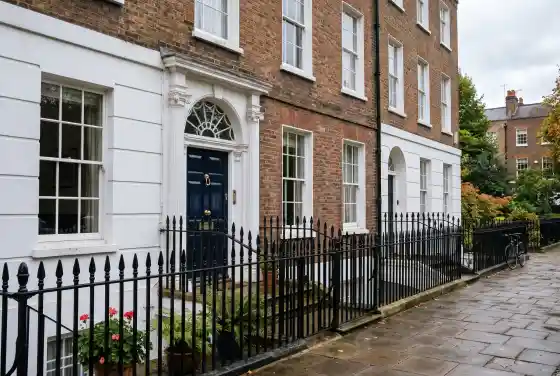
| Barnsbury | Late Georgian and early Victorian squares and terraces such as Barnsbury Square, Thornhill Square and Gibson Square, four storeys over a basement | Parapet and valley gutters behind the front wall, a later mansard storey bearing on the old walls, damp in basement rooms |
| Canonbury | Stock brick terraces with stucco ground floors around Canonbury Square, plus East Canonbury's smaller houses | Bulging front walls where the brick leaves have parted, hidden roof valleys, shared stacks along the terrace |
| Duncan Terrace/Colebrooke Row and the New River streets | Some of the borough's earliest protected terraces near Angel, a mix of single houses and long-standing flat conversions | Conversion approvals, lime pointing replaced with cement, sash windows inside conservation area rules |
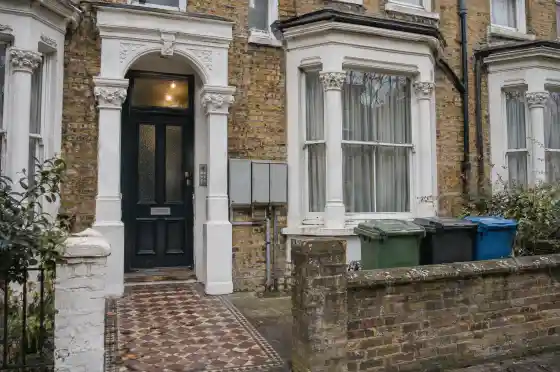
| Highbury Fields and Highbury New Park | Large mid and late Victorian houses with canted bays, many divided into two to four flats, and rare semi-detached villas | Bay movement near street trees, rear outriggers with flat roofs, chimney breasts removed below |
| Holloway, Tufnell Park and Hillmarton | Victorian terraces and villas off Holloway Road, Camden Road and Hillmarton Road, widely converted | Fire separation between flats, shared drains under neighbouring flats, weak sound insulation |
| Archway and Whitehall Park | Late Victorian and Edwardian terraces climbing towards Highgate Hill, with steeper gardens | Retaining walls, garden steps and cracking on sloping plots |
| Clerkenwell Green and Charterhouse Square | Warehouse and printing works lofts beside Georgian survivors such as Myddelton Square | Internal gutters, flat roofs, condensation at single glazing, commercial and residential cost splits in the lease |
Late Georgian squares and a missing interwar generation
Islington’s housing comes in two layers with almost nothing between them. The Valuation Office Agency dates 43.1% of the borough’s homes before 1919, against 28.9% across London, so soft stock brick, lime mortar, timber floors and shallow roofs hidden behind parapets are the starting point for most inspections in Barnsbury, Canonbury and around Angel. Only 4% of Islington homes date from 1919 to 1939, and 26.4% were built from 1945 to 1982, much of it council-built estates in N1, N5 and N7. A buyer in Barnsbury or Holloway is therefore usually choosing between a Victorian or Georgian house with a long history of alteration and a post-war flat whose shared concrete, windows and heating drive the service charge.
On a Barnsbury Square or Thornhill Square house, the weak point is usually the hidden roof. Lead or felt-lined valley and parapet gutters in Barnsbury fail quietly, and the first sign is a stain on a top-floor ceiling, so we get into the roof void wherever a hatch allows and check the gutter boards and outlets. Many Canonbury terraces had a mansard storey added in the twentieth century; we look at how it bears on the old walls and whether its dormers are watertight. For a Canonbury or Highbury house still in single use, our period house survey sets out that roof, wall and basement work in full.
Split villas in Highbury and Holloway, lofts in Clerkenwell
Flats and maisonettes make up 83.4% of Islington’s council tax list, and the 2021 Census put 21.3% of households in part of a converted or shared house, against 11.1% capital-wide. In Highbury, Holloway and Tufnell Park that means big Victorian houses split into two to four flats, where we regularly find chimney breasts removed without visible support, shared drains running under a neighbour’s kitchen and fire separation that falls short of current expectations. Bays near street trees on Highbury New Park can show movement on the clay, which the British Geological Survey explains shrinks and swells with its moisture content.
Another 3.1% of Islington households live in a converted former warehouse, school or similar building, well above the capital’s 1.2%. Around Clerkenwell Green, St John Street and Charterhouse Square those are former workshops and printing works, with large windows, flat roofs, internal gutters and cast-iron or steel frames. Condensation at kept single glazing is common in Clerkenwell lofts, and where shops or offices share the building the lease must say clearly how repair and insurance costs are split.
Estate flats and Islington Council’s building control rule
At the 2021 Census, 40.2% of Islington households rented from a social landlord, so Islington Council remains a large freeholder of blocks across N1, N5 and N7. Concrete balconies and walkways on those estates can show cracking and rust staining where reinforcement is corroding, and we note the age of windows, roofs and communal heating because each is a common subject of section 20 consultation. Leasehold sales made up 81.4% of everything HM Land Registry recorded in Islington in the year to September 2026, so for most buyers the lease, the service charge and the freeholder’s repair plans weigh as much as the flat.
One Islington rule catches buyers out. The council’s building control FAQs say Islington Council leaseholders who alter their flat must use the council’s own Building Control service, so on an altered ex-council flat ask which route was used and for the completion certificate. An Islington Level 3 survey on an estate flat lists those documents alongside what we saw on the stairs, decks and visible roofs.
Conservation areas from Clerkenwell Green to Poets Road
The national planning dataset records 41 conservation areas covering 39.6% of Islington’s land, and the council’s conservation areas page lists 42, the first two being Clerkenwell Green and New River in November 1968 and the newest Poets Road in September 2025. Inside them the council controls demolition, many minor works and trees, and Article 4(2) directions can bring changes to doors, windows or painted brickwork under planning control. Before you price replacement sashes on Duncan Terrace or a roof extension in Hillmarton, read the design guidelines for that area and search Islington planning for past decisions on the street.
Historic England lists 1,049 entries in Islington, while the council’s listed buildings page counts around 4,500 listed buildings, because a single entry often covers a whole terrace in Canonbury or Barnsbury. Listed building consent is needed for most alterations inside or out, and unauthorised past changes pass to the new owner, so on a listed Barnsbury or Myddelton Square house a listed building survey is the closer fit.
Basements have their own guidance in Islington: the Basement Development SPD, adopted in January 2016, says planning permission is usually required. Basement rooms in Canonbury and Barnsbury often show damp where pavement levels have risen against the wall, and a dug-out lower ground floor needs its consent, completion certificate and party wall awards checked.
What N1, N5 and N7 homes sold for
The median price paid in Islington was £650,000 in the year to September 2026, against £518,000 for London. A flat sold for a median £579,000 and a terraced house for £1,455,000, so on a Canonbury or Barnsbury terrace the survey concentrates on the expensive items: the hidden roof, bulging front walls and past structural alterations. On the energy register, 38.1% of Islington homes are rated D or below, lower than the capital’s 45% because post-war blocks score better, while solid-walled Georgian houses with single-glazed sashes in Barnsbury are the likeliest to fall in that band.
Booking an Islington inspection
L3S London carries out RICS Level 3 Building Surveys on Islington homes from Canonbury terraces to Clerkenwell lofts, each inspected and signed by an RICS-qualified surveyor. Most Barnsbury and Highbury terraces have no side passage, so ladders come through the house and rear outrigger roofs are often viewed from upper windows. If you are unsure whether a Level 3 survey in Islington is needed for a newer flat near King’s Cross, our comparison of Level 2 and Level 3 surveys explains when a lighter survey may be enough.
Islington's stock, tenure and prices in numbers
| Figure | Islington | London | What it means for the survey | Source and period |
|---|---|---|---|---|
| Homes built before 1919 | 43.1% | 28.9% | Over two in five Islington homes predate 1919, so lime mortar, slate roofs behind parapets and shallow footings dominate Barnsbury and Canonbury. | VOA, list at 31 Mar 2026 (112,310 homes) |
| Homes built 1919 to 1939 | 4% | 22% | Islington built little between the wars, so a buyer is usually choosing a Victorian conversion in Holloway or a post-war block, not a 1930s house. | VOA, list at 31 Mar 2026 (112,310 homes) |
| Homes built 1945 to 1982 | 26.4% | 22.3% | Post-war council estates across N1 and N7 bring concrete balconies, deck access and communal heating to inspect. | VOA, list at 31 Mar 2026 (112,310 homes) |
| Flats and maisonettes, share of homes | 83.4% | 57.5% | Flats dominate from Clerkenwell to Archway, so shared roofs, walls and drains are a large part of every report from Angel to Tufnell Park. | VOA, list at 31 Mar 2026 (112,310 homes) |
| Households in part of a converted or shared house | 21.3% | 11.1% | Split villas in Highbury and Tufnell Park mean checking fire separation, sound insulation and conversion paperwork. | ONS Census 2021, 21 Mar 2021 (96,496 households) |
| Households in a converted former school, church, warehouse or similar | 3.1% | 1.2% | Clerkenwell warehouse and workshop lofts push this share well above the capital's, with internal gutters and flat roofs to check. | ONS Census 2021, 21 Mar 2021 (96,496 households) |
| Households in social rented homes | 40.2% | 23.1% | Islington Council is freeholder of many estate blocks, so section 20 major works and its own building control rule matter to leaseholders. | ONS Census 2021, 21 Mar 2021 (96,496 households) |
| Share of sales that were leasehold | 81.4% | 50.8% | Most sales from Barnsbury to Archway are leases, so the lease, service charge and the freeholder's repair record sit beside the building's condition. | HM Land Registry, sales Oct 2025 to Sep 2026 (1,448 sales) |
| Median price paid, all homes | £650,000 | £518,000 | Well above the capital-wide median, which makes one failed Barnsbury valley gutter or unapproved basement a large cost. | HM Land Registry, sales Oct 2025 to Sep 2026 (1,448 sales) |
| Median price paid, flats and maisonettes | £579,000 | £425,000 | The typical flat sale, from a Highbury conversion to an Angel mansion block; shared repairs at this price are worth pricing before exchange. | HM Land Registry, sales Oct 2025 to Sep 2026 (1,174 sales) |
| Median price paid, terraced houses | £1,455,000 | £585,000 | A Canonbury or Barnsbury terrace costs well over double the flat median, and its roof, front wall and basement are the costly parts. | HM Land Registry, sales Oct 2025 to Sep 2026 (241 sales) |
| Homes rated D or below | 38.1% | 45% | Lower than the capital's share because post-war blocks off Holloway Road tend to score better; solid-walled Georgian terraces in Barnsbury are the likeliest to sit at D or below. | EPC register, certificates to 12 Oct 2026 (90,770 homes) |
| Conservation areas (distinct names) | 41 | n/a | The dataset count; the council's own list now runs to 42 with Poets Road, designated in September 2025. | MHCLG planning data, published Nov 2026 |
| Share of the borough inside a conservation area | 39.6% | n/a | Large areas from Clerkenwell Green to Whitehall Park, need consent for demolition, many external changes and tree work. | MHCLG planning data, published Nov 2026 |
| Listed building entries | 1,049 | n/a | One entry can cover a whole Canonbury or Barnsbury terrace, which is why the council counts around 4,500 listed buildings. | Historic England list, published Nov 2026 |
Data: Valuation Office Agency: Council Tax stock of properties 2026; ONS Census 2021; HM Land Registry Price Paid Data; Energy Performance of Buildings Register (domestic EPCs); planning.data.gov.uk: conservation areas (MHCLG); Historic England National Heritage List for England, via planning.data.gov.uk. Open Government Licence v3.0.
Questions from Islington buyers
Is a Level 3 survey worth it for a flat in a converted Highbury house?
In most cases, yes. A Highbury or Holloway conversion sits inside a Victorian house that has usually been altered more than once, with 21.3% of Islington households living in a converted or shared house at the 2021 Census. On a Highbury conversion we inspect the roof, outrigger, rear walls and drains as far as access allows, and list the papers to request, such as building control sign-off for the conversion and any later loft or kitchen work.
What should a survey cover on an ex-council flat in Holloway or Archway?
On a Holloway or Archway estate, your surveyor inspects the flat and the parts of the block they can reach, such as stairs, decks, windows and visible roofs, noting the construction type, any concrete cracking and the age of communal services. Islington Council leaseholders who want to alter their flat must use the council's own Building Control service, so ask which route any past alteration took. Your solicitor should also ask for the section 20 history and planned major works.
Can I replace the sash windows on my Barnsbury house?
Barnsbury, designated in April 1969, is one of the borough's oldest conservation areas, and many houses there are also listed. Like-for-like repair is usually acceptable, but changing materials or design may need planning permission, and an Article 4(2) direction can bring windows, doors and painted brickwork under control. Any change to a listed Barnsbury house needs listed building consent, so check the National Heritage List before you budget.
Are there rules on digging out a basement in Canonbury or Highbury?
Yes. Islington adopted a Basement Development supplementary planning document in January 2016, and planning permission is usually needed for a new basement. If the Canonbury or Highbury house you are buying already has one, ask for the planning consent, the building control completion certificate and any party wall awards, and expect the report to look closely at damp and cracking around it.
Why does the surveyor look along the whole terrace on a Canonbury house?
Shared chimney stacks, parapets and roof valleys on a Canonbury terrace are joint structures, and a defect next door can let water into your house. We look along a Canonbury Square terrace from the street and the garden rather than going next door. If a party structure shows a problem, the report says so and may point you to the 1996 Party Wall Act.
Sources
- Islington Council: Planning and building control (checked 26 November 2026)
- Islington Council: Building control (checked 26 November 2026)
- Islington Council: Building control FAQs (council leaseholders) (checked 26 November 2026)
- Islington Council: Conservation areas and Article 4(2) directions (checked 26 November 2026)
- Islington Council: Listed buildings (checked 26 November 2026)
- Islington Council: Basement development SPD (checked 26 November 2026)
- Historic England: Search the List (checked 26 November 2026)
- British Geological Survey: Swelling and shrinking soils (checked 26 November 2026)