
Lambeth neighbourhoods from Waterloo down to Streatham
| Area | Homes you mostly find | What the surveyor checks first |
|---|---|---|
| Kennington and Cleaver Square | Georgian terraces off Kennington Road, and the neo-Georgian cottages and flats built by the Duchy of Cornwall | Lead valley gutters behind Kennington parapets, timber lintels behind brick arches, damp vaults under the front steps |
| Roupell Street, Waterloo | Small early nineteenth century workers' cottages near Waterloo station | Shallow footings, lime mortar repointed in cement, and Roupell Street roofs that are hard to see from the pavement |
| Stockwell Park and Albert Square | Grand early Victorian villas on Stockwell Park Crescent and Albert Square, most now split into flats | Fire separation between flats, shared drains, and Article 4 control over Stockwell windows and doors |
| Brixton Hill, Tulse Hill and Railton Road | Big Victorian houses on Brixton Hill and Tulse Hill, terraces around Railton Road, the Loughborough and Myatts Field estates | Damp in Brixton lower ground flats, blocked lightwell drains, and planned major works on council estates |
| Clapham Old Town and Abbeville Road | Georgian houses facing Clapham Common, then late Victorian and Edwardian terraces towards Clapham Park | Clapham loft and basement conversions, the steels behind them, and Building Regulations sign-off for each |
| Herne Hill and Brockwell Park | Edwardian terraces near Brockwell Park and Victorian villas on Herne Hill itself | Ground near the culverted River Effra, bays moving on clay, cracked garden walls beside Brockwell Park trees |
| Streatham, Leigham Court and Hyde Farm | Victorian houses on Leigham Court Road, 1930s semis, Streatham High Road mansion blocks, the Hyde Farm terraces | Rusting wall ties in early cavity walls, clay movement under Streatham bays, Article 4 limits at Hyde Farm |
From Lambeth Palace on the Albert Embankment to the 1930s avenues above Streatham Common, Lambeth is a long strip of homes from almost every decade since 1800. A Level 3 survey in Lambeth therefore starts from the postcode: SE11 and SW9 mean parapets, lime and conversions, while SW16 and SE27 mean cavity wall ties and clay under bay windows.
Georgian Kennington, Victorian Stockwell, inter-war Streatham
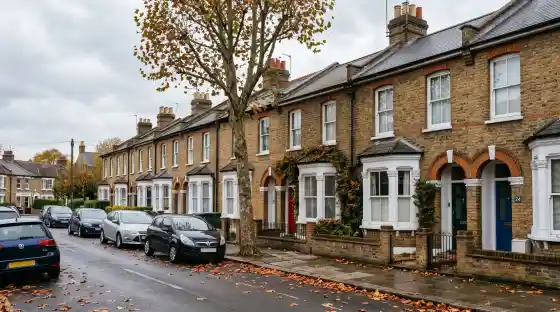
The Valuation Office Agency dates 36.4% of Lambeth homes to before 1900, against 20.8% across London, and most of them stand north of Brixton in Kennington, Vauxhall, Stockwell and Clapham. In those streets the inspection is about solid brick walls laid in lime, timber ground floors close to the soil and Welsh slate on rafters that have carried it since Victoria’s reign.
The second wave came between the wars, when 13.5% of today’s homes went up, mostly around Streatham, West Norwood and Leigham Court. Those houses were built with early cavity walls whose steel ties rust and swell, so horizontal cracks in the mortar of a Streatham semi are one of the first things the surveyor looks for.
Flats and maisonettes make up 76.5% of the Lambeth stock. The 2021 Census shows how they were made: 51.6% of households live in purpose-built blocks, from the Loughborough Estate to the Nine Elms towers, and 20.6% live in part of a converted or shared house, against 11.1% for the capital. A converted Stockwell or Brixton villa brings fire separation between flats, sound through old timber floors and the freeholder’s consent for past works into the report. A further 33.6% of Lambeth households rent from the council or a housing association, so many flats on sale sit on estates such as Myatts Field where the council is still freeholder and passes major works on through the service charge.
Clay, the buried Effra and the river edge at Vauxhall
South of Kennington most of Lambeth stands on clay, which shrinks in dry summers and swells in wet winters beneath the shallow footings of Victorian and 1930s houses. Plane trees on Brixton Hill, Tulse Hill and around Brockwell Park draw water out of that clay, so a crack at a Herne Hill bay is recorded with its width, its direction and the nearest tree before anyone calls it subsidence.
The River Effra once ran openly through Brixton and Herne Hill and now flows in sewers below the streets, and surface water after heavy rain is the main flood concern in that part of the borough. Near the Thames the picture changes: the Environment Agency map puts 14.7% of Lambeth in Flood Zone 3, and that zone ignores the Thames Barrier and the river walls that protect Waterloo and Vauxhall. Check the address on the GOV.UK long term flood risk service and expect the surveyor to look hard at Vauxhall and Kennington basements, lightwells and front vaults.
Conservation areas from Lambeth Palace to Streatham Common
The national planning dataset maps 62 conservation areas in Lambeth, covering 29.6% of the borough, the same picture the council gives in its conservation area profiles. The largest are Clapham, Brockwell Park, Streatham Common, the South Bank and Albert Embankment, followed by Rush Common and Brixton Hill, Kennington and Vauxhall. On a house in Clapham or Kennington, a dormer, a rear extension or a lost front wall may have needed consent, and the report points the conveyancer to it.
Lambeth Council’s Article 4 page lists directions over all or part of Albert Square, Hyde Farm, Lansdowne Gardens, Leigham Court Estate, Park Hall Road, St Marks, Stockwell Park, Streatham Lodge and Vauxhall, removing permitted development rights for external alterations. In those Stockwell, Vauxhall and Hyde Farm streets, uPVC windows, a new front door or a re-covered roof slope may have needed planning permission, and enforcement can follow a sale. A borough-wide direction from 2024 also removes the right to turn a family house into a small HMO without permission, which matters if you plan to let a big Brixton or Streatham house by the room.
Historic England lists 953 entries in Lambeth, many of them Georgian houses in Kennington and Clapham, where repairs to original fabric need listed building consent. Past decisions for any address are on the council’s planning applications pages, and our guide to property law for buyers explains how conservation areas, listing and Article 4 differ.
Leases, service charges and Lambeth prices
Leasehold made up 74% of Lambeth sales registered in the year to September 2026, against 50.8% for the capital. In a Clapham mansion flat or a Stockwell conversion, the lease, the service charge and the shared roof, walls and drains carry as much risk as the rooms, and in the Nine Elms and Vauxhall towers the questions move to cladding, building safety documents and the reserve fund.
The median price paid across Lambeth was £528,500, against £518,000 across London, with terraced houses at £860,000 and semi-detached houses at £1,100,000. With Clapham and Herne Hill houses at those prices, one missed structural fault can cost many times the fee, and our guide to survey costs explains how that fee is set. The all-homes median was 3.9% lower than a year earlier, but medians move with the mix of homes sold, so the change says more about how many Vauxhall flats sold than about the value of any Brixton house.
Where the surveyor spends the time in Lambeth homes
In a Kennington or Clapham Old Town Georgian house, the surveyor goes into the roof void to see the hidden valley gutter, checks the timber lintels behind the brick arches, and looks for bowing in the front wall and joists notched for pipes. In a split villa on Stockwell Park Crescent or Brixton Hill, the time goes on fire doors, the flat roofs over back additions and the lightwell drains that keep SW9 lower ground flats dry. In a 1930s Streatham or West Norwood house it goes on the bay, the original clay tile roof, Crittall-style steel windows and the tie corrosion that shows as horizontal cracks.
The energy register rates 43.4% of Lambeth homes D or below, which in the Victorian streets means solid walls, single-glazed sashes and old boilers, and a landlord letting one needs at least an E under the minimum energy efficiency standard. For these houses the period house survey is the usual choice, with a damp and timber investigation where a Brixton lower ground floor reads wet. Where a loft or basement has been added in Clapham, ask the seller for the completion certificate, which Lambeth building control issues for work it approved.
Booking an inspection south of the river in Lambeth
Send L3S London the address of the Lambeth home, whether a Kennington terrace, a Brixton conversion or a Streatham semi, and we reply with a fixed written fee set by its size. Red routes on Brixton Road, Clapham Road and Streatham High Road mean the surveyor parks in a side street, so a visitor permit from the seller helps.
Lambeth's housing record beside the capital's
| Figure | Lambeth | London | What it means for the survey | Source and period |
|---|---|---|---|---|
| Homes built before 1900 | 36.4% | 20.8% | Most of these pre-1900 homes stand in Kennington, Vauxhall, Stockwell and Clapham: solid walls, lime mortar and slate roofs. | VOA, list at 31 Mar 2026 (149,490 homes) |
| Homes built 1919 to 1939 | 13.5% | 22% | The inter-war layer sits mostly in Streatham and West Norwood, where early cavity wall ties rust and bays move. | VOA, list at 31 Mar 2026 (149,490 homes) |
| Flats and maisonettes, share of homes | 76.5% | 57.5% | Three in four Lambeth homes are flats, so the shared roof, walls and drains are part of most inspections. | VOA, list at 31 Mar 2026 (149,490 homes) |
| Households in part of a converted or shared house | 20.6% | 11.1% | The converted Stockwell and Brixton villas: fire separation, sound through old floors and the freeholder's consent. | ONS Census 2021, 21 Mar 2021 (134,688 households) |
| Households in a purpose-built block of flats | 51.6% | 40.3% | From the Loughborough Estate to Nine Elms towers, the block's condition and service charge matter as much as the flat. | ONS Census 2021, 21 Mar 2021 (134,688 households) |
| Households in social rented homes | 33.6% | 23.1% | Many Lambeth flats for sale sit on estates where the council is freeholder and passes on major works costs. | ONS Census 2021, 21 Mar 2021 (134,688 households) |
| Median price paid, all homes | £528,500 | £518,000 | A typical Lambeth purchase sits just above the capital-wide median, mostly a leasehold flat. | HM Land Registry, sales Oct 2025 to Sep 2026 (2,661 sales) |
| Median price paid, terraced houses | £860,000 | £585,000 | Terraced houses in Clapham, Kennington and Herne Hill carry the highest stakes if a structural fault is missed. | HM Land Registry, sales Oct 2025 to Sep 2026 (553 sales) |
| Median price paid, semi-detached houses | £1,100,000 | £625,000 | Semis are mostly Streatham and West Norwood inter-war houses with large gardens, extensions and trees. | HM Land Registry, sales Oct 2025 to Sep 2026 (158 sales) |
| Share of sales that were leasehold | 74% | 50.8% | Most Lambeth buyers take on a lease, so service charge, reserve fund and repair clauses need reading with the report. | HM Land Registry, sales Oct 2025 to Sep 2026 (2,661 sales) |
| Change in median price paid on the year before | -3.9% | -2.3% | The Lambeth median moves with the mix of flats and houses sold; it is not a change in any one home's value. | HM Land Registry, Oct 2025 to Sep 2026 v the year before (6,632 sales) |
| Homes rated D or below | 43.4% | 45% | Solid walls, single-glazed sashes and old boilers in the Victorian streets; letting needs at least an E. | EPC register, certificates to 12 Oct 2026 (128,686 homes) |
| Conservation areas (distinct names) | 62 | n/a | From Lambeth Palace to Streatham Common, check the address before planning windows, roofs or extensions. | MHCLG planning data, published Nov 2026 |
| Share of the borough inside a conservation area | 29.6% | n/a | Close to a third of Lambeth lies in a conservation area, so past alterations may have needed consent. | MHCLG planning data, published Nov 2026 |
| Listed building entries | 953 | n/a | Many are Georgian houses in Kennington and Clapham, where repairs to fabric need listed building consent. | Historic England list, published Nov 2026 |
| Share of the borough in Flood Zone 3 | 14.7% | n/a | Mostly low ground near the Thames; the zone ignores defences, so check basements and lightwells by the river. | Environment Agency, published Nov 2026 |
Data: Valuation Office Agency: Council Tax stock of properties 2026; ONS Census 2021; HM Land Registry Price Paid Data; Energy Performance of Buildings Register (domestic EPCs); planning.data.gov.uk: conservation areas (MHCLG); Historic England National Heritage List for England, via planning.data.gov.uk; Environment Agency Flood Map for Planning (flood zones), via planning.data.gov.uk. Open Government Licence v3.0.
Questions from Lambeth buyers
Which Lambeth streets need planning permission for new windows?
Those inside the Article 4 directions at Albert Square, Hyde Farm, Lansdowne Gardens, Leigham Court Estate, Park Hall Road, St Marks, Stockwell Park, Streatham Lodge and Vauxhall, where the council has removed permitted development rights for external alterations. Read the council's profile for Hyde Farm or Stockwell Park to confirm the boundary before you budget for uPVC replacements or a new front door.
Is a Level 3 survey worth it for a 1930s semi in Streatham?
Often, because 13.5% of Lambeth homes date from between the wars and many Streatham and West Norwood semis still have their first wall ties and roof tiles. A Level 3 survey in Lambeth on one of them maps any horizontal cracking, checks the bay on clay near street trees, and says whether a wall tie specialist should look before exchange.
Why are so many Brixton lower ground flats damp?
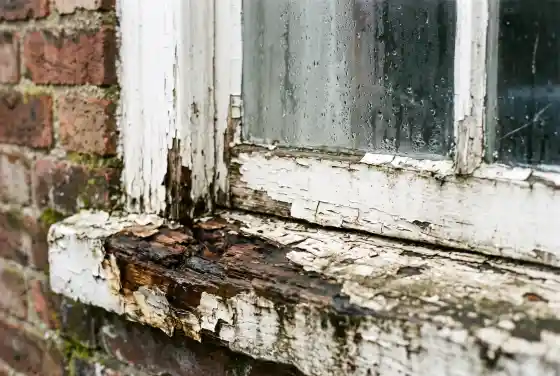
They sit partly below pavement or garden level in Victorian villas on Brixton Hill, Tulse Hill and around Stockwell Park, so water reaches the walls from outside. Blocked lightwell gullies, garden soil above the damp-proof course and poor ventilation are the usual causes, and the report says which one the moisture readings point to in that SW9 flat.
Do riverside homes at Vauxhall carry a flood risk?
The Environment Agency places 14.7% of Lambeth in Flood Zone 3, on a map that leaves out the Thames Barrier and the river walls. Enter the exact Vauxhall or Kennington address on the GOV.UK long term flood risk service, and expect the surveyor to inspect any basement or lightwell there for past water entry.
What paperwork should come with a Clapham house that has a loft conversion?
Ask the Clapham seller for the planning decision or lawful development certificate, the building control completion certificate and the engineer's calculations for any steels. A Lambeth Level 3 survey of an Abbeville Road or Clapham Old Town house then checks the loft stair, fire doors and visible structure against those papers, and lists anything missing for your conveyancer.
Sources
- Valuation Office Agency: Council Tax stock of properties 2026 (checked 26 November 2026)
- Lambeth Council: conservation area profiles (checked 26 November 2026)
- Lambeth Council: Article 4 Directions (checked 26 November 2026)
- Lambeth Council: planning applications (checked 26 November 2026)
- Lambeth Council: building control and regulations (checked 26 November 2026)
- GOV.UK: check long term flood risk (checked 26 November 2026)
- GOV.UK: domestic private rented property minimum energy efficiency standard (checked 26 November 2026)
- HM Land Registry: Price Paid Data (sales dated 1 October 2025 to 30 September 2026, published to 3 November 2026; Open Government Licence v3.0) (checked 26 November 2026)
- GOV.UK Get energy performance of buildings data: domestic EPCs, England and Wales (certificates lodged 2008 to 12 October 2026; Open Government Licence v3.0) (checked 26 November 2026)